Notes on retaining wall design, from the engineers building the calculator.
Design fundamentals, seismic considerations, and the occasional submittal war story — written for the engineers actually specifying these walls.
Why the Resultant Must Stay in the Middle Third
A resultant outside the middle third means the heel of the footing is lifting off the soil. Here is why that matters even when overturning passes, and how to fix it.
Why a Retaining Wall Stem Fails in Bending and How to Fix It
When RetainX shows Mu / ΦMn > 1.0, the stem is not strong enough for the bending the soil puts on it. Here is what that means and the three practical fixes: more rebar, a thicker wall, or both, with rules of thumb for sizing.
How RetainX Calculates Seismic Earth Pressure: The Mononobe-Okabe Method
We explain the methods used to determine the seismic forces induced on retaining walls and how they are applied in the software.
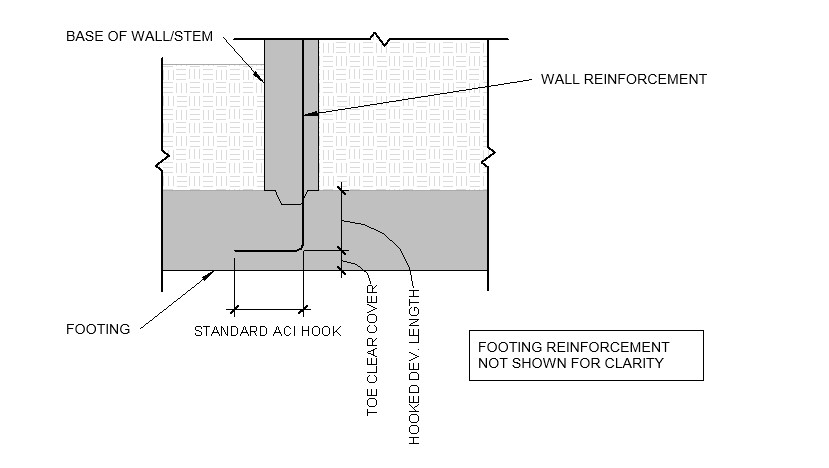
How RetainX Checks Hooked-Bar Development Length in Footings
Stem reinforcement that can't go straight down far enough to develop its full strength gets a hook instead - but only if the footing is deep enough to fit it. Here's the ACI 318 check behind RetainX's warning, and what changed between the 318-14 and 318-19 editions.
How RetainX Calculates Wall Pressure from Adjacent Footings and Line Loads
How the Adjacent Load input turns a strip footing, line load or square footing behind the wall into lateral pressure, how to choose Active or At-Rest, and what each warning means.
How RetainX Checks Wall Stems for Combined Axial Load and Bending
How to read the interaction chart on the Diagrams tab, what the App's capacity cap line means, and what each stem axial-load warning is telling you.